









We are experts

More than 30 years of experience certify us as a leading firm in the transportation infrastructure sector

Maritime law

Advisory services and representation in:

  • Ship’s registry
  • Shipbuilding contracts and Sale of ships contracts
  • Ship’s mortgages
  • Permits and licenses for the Maritime Authority (DIMAR)
  • Administrative and jurisdictional investigations
  • Charter and transportation agreements
  • General average
  • Coastal zone and harbour concessions
  • Licenses for offshore platforms
  • Marine insurance
  • Ship’s arrest
  • Route and tariff’s registration

Port law

Advisory services and representation in:

  • Structuration of port concessions
  • Contracts for ports and stevedoring services
  • Civil liability of terminal operators and stevedores
  • Drafting of port operations technical conditions
  • Competition law and Consumer Law applicable in the ports activities
  • Port insurance

Aviation law

Advisory services and representation in:

  • Legal counselling in contracts of sale, hiring, leasing and chartering of aircrafts
  • Aircraft’s mortgages
  • Aircraft’s registration for the Aeronautical Board
  • Legal counselling in the operation of aviation infrastructure
  • Legal counselling in the operation of aviation infrastructure
  • Airport concessions
  • Drone licensing, registration and practice
  • Aviation insurance

Transportation law

Advisory services and representation in:

  • Contracts of carriage (national and international)
  • Cargo insurance contracts and Civil liability insurance contracts
  • Transport tariffs (SICTE-TAC)
  • Licenses and registry of carriers for the Transport Authority
  • Incoterms
  • Customs clearance
  • Legal risks management in transport logistics and operations
  • Transport risks assessment and Managing carrier’s liability

Insurance law

  • Advisory in the design and drafting of marine, aviation, transportation, ports and logistics insurance cover terms and conditions
  • Advisory on marine, aviation, transportation, ports and logistics insurance contracts
  • Claims management

Enviromental law

  • Environmental licenses and permits
  • Environmental compliance
  • Advisory and representation on environmental investigation proceedings
  • Environmental compliance
  • Environmental liability

Commercial and Corporate law

  • Incorporation of companies and partnerships
  • Bylaws reform
  • Commercial contracts
  • Legal assistance to board of directors and shareholders meetings
  • Legal counseling in corporate matters
  • Due diligence

Dispute resolution

  • Litigation fo civil jurisdiction and administrative jurisdiction
  • Litigation for Superintendences and other authorities with jurisdictional functions
  • Insurances
  • Administrative arbitration
  • National and international commercial arbitration
  • National and international maritime arbitration
  • International investment arbitration

Public politics

Advice on updating and modernizing legislation on:

  • Transports and logistics laws 
  • Maritime laws
  • Ports laws 
  • Aviation regulations
  • Logistic regulations

Legal matters of trade logistics

  • Prefeasibility studies of specialized logistic infrastructure
  • Legal aspects concerning logistic operations
  • Insurance coverage in logistic operations
  • Legal risks of logistics transportation and operations
If you require specialized and personalized legal services...

F.A.Q

The contract of carriage is an agreement between the parties whereby one of them undertakes, in return for a price, to transport persons or goods from one place to another, by a specified means and within the agreed period, and to deliver such goods to the consignee (Article 981 of the Commercial Code)

The carriage of goods by sea may be contracted under two modalities: (i) the charterparty; and (ii) the contract of carriage under a bill of lading.

The charterparty is used when a single party needs to transport a quantity of goods that occupies the entire – or a substantial – capacity of a vessel, as in the case of bulk commodities such as coal, iron, oil, gas, grains, salt, sugar, fertilisers, urea, among others.

The contract of carriage under a bill of lading is used when the goods to be transported do not occupy the whole, nor a significant part, of the vessel’s capacity, as in the case of general cargo and, usually, containerised cargo.

The bill of lading (B/L) is the transport document issued by the carrier once the goods have been loaded on board the vessel

It serves as evidence of the existence of the contract of carriage by sea and, at the same time, constitutes a receipt for the goods carried, the description of which must be observed by both parties (the shipper and the carrier) for delivery at the port of destination

It is also a negotiable document (a document of title representing the goods), which may be used to negotiate or transfer the goods during transit, either by endorsement and delivery of the B/L (if issued to order) or by simple delivery (if issued to bearer).

Likewise, it may be used to provide security for a loan or a commercial transaction. The bill of lading (B/L) also fulfils customs functions in the process of importing or exporting goods, as well as other uses in banking and foreign exchange matters.

A port concession is an administrative contract by virtue of which a port company is allowed to temporarily and exclusively occupy and use beaches, low-tide lands, and areas accessory thereto, for the construction and operation of a port, in exchange for an economic consideration in favor of the Nation, and of the municipalities or districts where the ports operate.

A port concession is an administrative contract whereby a port company is authorized to temporarily and exclusively occupy and use beaches, low-tide lands, and accessory areas for the construction and operation of a port, in exchange for an economic consideration in favor of the Nation. Port concessions are granted by the National Infrastructure Agency (Agencia Nacional de Infraestructura – ANI) or Cormagdalena, depending on their jurisdiction.

Maritime concessions are the authorization granted by DIMAR for the temporary use, enjoyment, and usufruct of public-use assets (such as beaches, low-tide lands, and maritime waters). These concessions are granted only for specific activities such as tourism, recreation, fishing, aquaculture, shipyards, industry, hotels, marinas, piers, submarine outfalls, protective works, non-port dredging, among others.

A private service port is one in which services are provided only to companies legally or economically related to the port company that owns the infrastructure

Conversely, a public service port is one in which services are provided to all those willing to submit to the applicable rates and operating conditions.

The Superintendence of Transportation is the entity in charge of supervising and inspecting ports. (Art. 27.1 Law 1 of 1991; Arts. 5.3 and 5.4 Decree 2409 of 2018).

Port companies must ensure the performance of preliminary studies on the environmental impact of the port to be constructed, as well as undertake to carry out detailed studies and adopt the necessary preservation measures to ensure the least possible impact of port activity.

It is a dispute resolution mechanism concerning international investments, in which foreign investors and host States participate, pursuant to agreements such as Free Trade Agreements (FTAs) or Bilateral Investment Treaties (BITs), among others.

The most common protections debated are:

  • Protection against expropriation (direct, indirect)
  • Fair and equitable treatment
  • National treatment
  • Most-favored-nation treatment
  • Freedom to transfer funds
  • Full protection and security

The main difference that may be identified is the transnational element of the dispute. National arbitration usually concerns a conflict between parties domiciled in the same country and relating to a dispute that does not involve a foreign element, and vice versa.

Therefore, while in national arbitration the rules and procedures are governed by Colombian law, international arbitration may submit the dispute to a external law and different from Colombian law

In particular, the law establishes that international arbitration is characterized by meeting one of the three criteria set forth in Article 62 of Law 1563 of 2012:

  • The parties are domiciled in different States
  • The place of performance of a substantial part of the obligations is located outside the State in which the parties are domiciled
  • The dispute submitted to arbitral decision affects the interests of international trade

Successful cases

Elaboración de recomendaciones para modernizar la normatividad de transporte en Colombia (2014-2016), asesoría en los ineamientos de política pública en materia servicio de transporte automotor de carga y elaboración de estudios de factibilidad para la Plataforma Logística Periurbana de Soacha

Análisis orientador para la formulación de políticas públicas en materia de formalización del transporte automotor de carga y elaboración de una propuesta de Decreto relativa a la operación de zonas de actividad logística y transporte terrestre de carga en República Dominicana

Representación ante la Superintendencia Financiera para solicitar la inscripción y la actualización de ésta en el REACOEX

Asesoría relacionada con terrenos de bajamar, elaboración de contratos, representación ante la Superintendencia de Transporte en investigaciones de incumplimientos contractuales, entre otros asuntos

Exemption from liability for the owner of a vessel under investigation by the General Maritime Directorate (DIMAR) for the maritime accident involving the grounding of a vessel...

Claim for breach of contract for major maintenance service of crude oil storage tank, processed through a complex arbitration process...
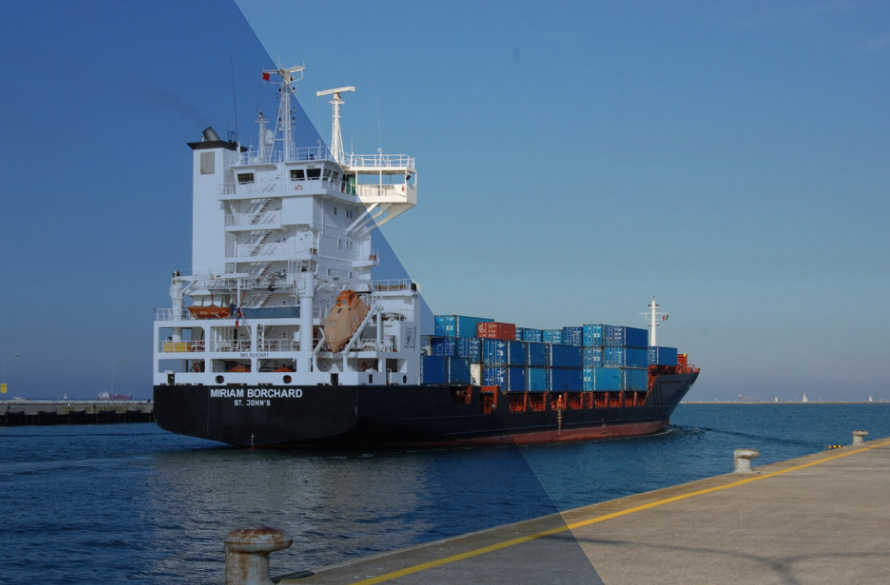
Claim against public service port and other companies for collision of a deep-draft vessel against a dock...
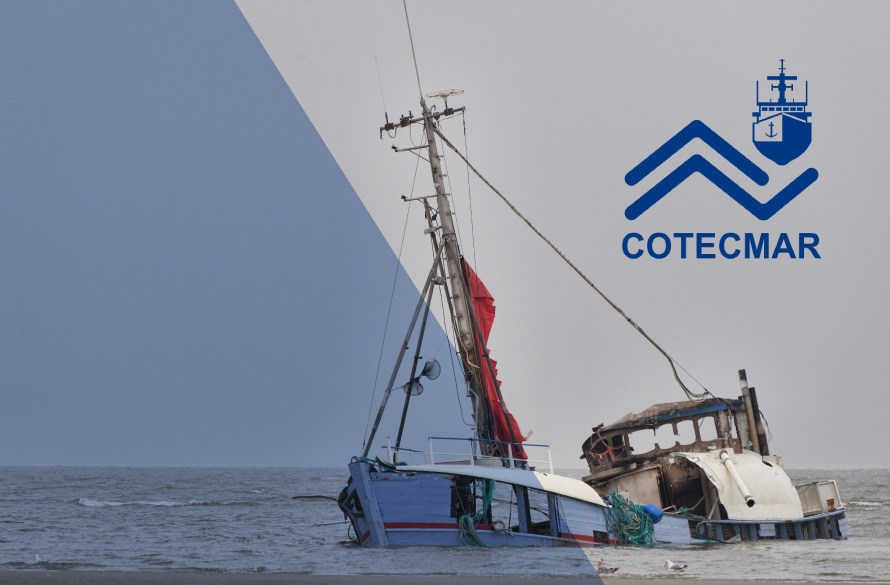
Maritime accident at the facilities of a maritime sector company, administrative investigations for DIMAR, civil liability insurance claim, representation in arbitration and labor litigation...

Are you familiar with the main challenges facing the port business in Colombia?

Leading law firm in the transportation sector in Colombia. 30 years of experience

© 2026 · All Rights Reserved · Made with Art3Facto · Privacy Policy

Leading law firm in the transportation sector in Colombia. 30 years of experience

© 2026 · Todos Los Derechos Reservados
Hecho con Art3Facto
Política de tratamiento de datos